.png)
Visual Personalization: A Beginner’s Guide to the Instant Recognition Outreach Strategy
The reality of modern sales is harsh: most cold outreach gets ignored simply because prospects have to work too hard to figure out why a message matters to them. When an inbox is flooded with hundreds of text-heavy emails, a recipient’s default action is to delete. To break through the noise, you need a strategy that makes relevance visible in the very first second.
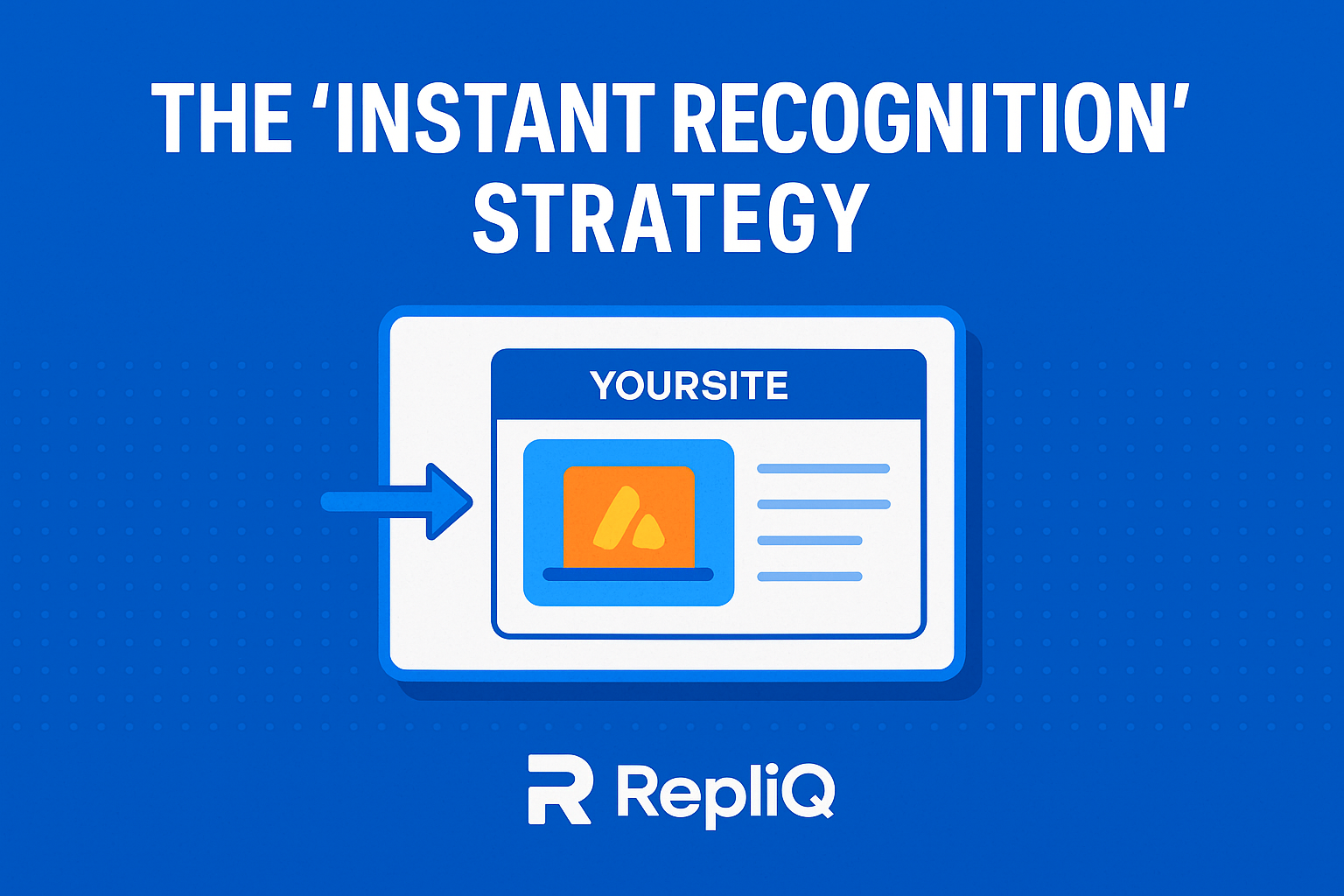
Enter instant recognition outreach. This approach hinges on showing the prospect something immediately familiar—like their own brand, website, or name—before they even read a single word of your copy. By integrating personalized images into your campaigns, you prove that your message is meant specifically for them.
This article provides a simple, beginner-friendly framework for mastering visual personalization. You will learn how to leverage these visuals to dramatically improve your first impressions, drive higher click-through rates, increase replies, and generate targeted website traffic. We will cover exactly what visual personalization is, the psychology behind why it works, how to execute it at scale without losing authenticity, the critical mistakes to avoid, and the best use cases for your campaigns.
As a leader in optimized first-impression visuals, RepliQ has built its foundation on helping teams create personalized image experiences that convert. Once you master the framework below, you can explore more outreach and personalization strategies to continue scaling your success.
What Visual Personalization Means in Outreach
For beginners, visual personalization can sound like a complex design task, but its definition is actually quite straightforward. It is the practice of using an image that reflects the prospect’s own context—placed prominently in your outreach—so they see it before they read your message.
It is crucial to separate this from basic text personalization. While text personalization relies on merging variables like “Hi Sarah” or “I saw you work at [Company Name],” image personalization leverages visual proof. This could be a screenshot of their website, their company logo, or a customized graphic featuring their brand colors.
The unique angle of this strategy is the pursuit of instant recognition. The goal is not just to add a flashy graphic to an email, but to make the image do the heavy lifting. The moment the prospect opens the message, the visual should trigger an immediate internal response: “This is about me.” When executed correctly, sales outreach personalization becomes less about convincing someone to read and more about showing them why they should care.
What Counts as a Personalized Visual?
To put this into practice, you need concrete examples that are easy to picture and replicate. The most effective prospecting visuals for beginners rely on familiar visual triggers rather than complex, over-engineered designs.
Common formats include:
- Personalized screenshots: An image of the prospect’s homepage or a specific landing page.
- Branded mockups: A digital device displaying the prospect's software or website.
- Personalized thumbnails: A video or link preview image that features the recipient's name or company logo.
- Simple AI-generated images: Graphics that dynamically pull in the prospect's brand assets.
- Context-based visuals: An image highlighting a visible pain point on their website, such as a low page-speed score or a broken layout element.
The strongest beginner examples are usually the simplest. A clear homepage screenshot or a clean graphic featuring the company name works perfectly. In visual outreach, relevance always matters more than visual flair.
Why This Is Different From Generic Personalization
Generic outreach asks the reader to read paragraphs of copy to infer relevance. It forces the prospect to do the work. Visual personalization, on the other hand, shows relevance immediately.
Typical cold email personalization tactics often rely on feature-heavy text, scraping obscure data points to prove the sender did their research. This can feel forced and unnatural. By contrast, a strategy focused on first-impression visuals cuts through the clutter. RepliQ’s differentiator in this space is a strategy-first approach: the focus is entirely on optimizing that critical first impression, rather than just stuffing an email with more merge tokens or text variables.
Why Instant Recognition Improves Attention and Response
In crowded inboxes and busy social feeds, attention is won in a fraction of a moment, not after a full read. The psychology behind instant recognition outreach is rooted in how the human brain processes visual information.
When a prospect sees a recognizable image, it drastically reduces cognitive friction. They instantly see familiar context, which lowers their guard and answers their subconscious question: "Is this spam?" This immediate recognition directly influences practical outcomes. It captures attention, builds curiosity, increases click potential, and drives stronger engagement. By optimizing that initial visual hook, you naturally increase your page visits and clicks, directly supporting your broader traffic goals.
According to the APA definition of first impression, the initial evaluation of a person or stimulus forms the foundation for all subsequent interactions. Furthermore, the APA on the primacy effect explains that information presented first has a disproportionate influence on how a message is perceived and remembered. By leading with first-impression visuals, you secure a positive evaluation before the prospect even reads your pitch, directly boosting your outreach response rates.
The First-Second Effect in Outreach
The first second a prospect spends looking at your message determines whether they will pay attention, skip it, or mistrust it entirely. This is the core of visual personalization in cold outreach.
To master instant recognition outreach, adopt this simple mental model:
- Recognition First: The image immediately proves relevance.
- Message Second: The copy provides the context and value proposition.
- CTA Third: The call-to-action directs the next step.
The personalized visual is not meant to replace good copywriting. Instead, it serves a specific purpose: to earn enough of the prospect's attention so that your carefully crafted copy actually gets read.
Why Images Often Beat Text-Only Outreach for Awareness
Text-only outreach frequently fails because the core relevance of the message is buried in the second or third sentence—sentences the prospect never reaches. When optimizing for website traffic and brand awareness, personalized outreach images create a significantly stronger first impression.
Image-led workflows stand in stark contrast to standard manual outreach approaches. While manual text outreach relies on the hope that a prospect will read thoroughly, image-led outreach guarantees visible relevance at a glance. This visible relevance is the ultimate advantage when your goal is to improve outreach click-through rates. When prospects instantly recognize themselves in your message, they are far more likely to click through to your landing page, making visuals an indispensable tool for traffic generation.
How to Create Personalized Screenshots at Scale
Transforming this strategy into a repeatable workflow is easier than it sounds. Scaling image personalization does not mean losing authenticity; it simply means standardizing your workflow while keeping the visual highly relevant to the recipient.
Going from raw prospect data to image creation, and finally to campaign execution, requires a simple, non-technical approach. By leveraging tools like RepliQ’s AI images, you can generate personalized images efficiently, ensuring every prospect gets a bespoke visual without requiring hours of manual design work.
Step 1: Choose a Recognizable Visual Trigger
The foundation of visual personalization is the trigger—the specific element the prospect will identify instantly.
The best triggers are universally recognized by the recipient: their website homepage, their company logo, their product page, or a visible reference to a pain point you solve. Prioritize context that aligns directly with your campaign goal. For example, if you are running a traffic campaign aimed at improving website conversions, using personalized screenshots of their current landing page serves as the perfect first-impression visual. It immediately grounds your outreach in their reality.
Step 2: Generate the Image Efficiently
Execution must feel manageable. Beginners should rely on scalable options like pre-built templates, AI personalized images, or automated screenshot workflows.
When generating personalized images, maintain consistency in your layout. Keep the background and framing uniform so that only the prospect-specific element (like the website screenshot or logo) changes dynamically. Remember that simple visuals almost always outperform overdesigned ones. A clean, straightforward image feels more natural, believable, and personal than a heavily branded, corporate graphic.
Step 3: Pair the Image With One Clear CTA
A visual should drive performance, not just aesthetics. To maximize outreach response rates and website traffic, the image must support a single, logical next step.
Whether your goal is a click, a reply, a review, or a site visit, your Call to Action (CTA) should align perfectly with the campaign goal rather than compete with the visual. Use short, punchy copy that reinforces what the image already implies. For instance, if your image shows a mockup of their website with a new feature added, your CTA should simply read: "Click here to see how this feature works on your site." This tight alignment is the hallmark of effective sales outreach personalization.
Step 4: Quality Check Before Sending at Scale
Trust is fragile in cold outreach. Before launching your campaign, you must implement a brief Quality Assurance (QA) process to prevent embarrassing, trust-breaking mistakes.
Always run through this practical checklist before sending personalized outreach images at scale:
- Is the company name spelled correctly?
- Is the screenshot current and not pulling from a parked domain or error page?
- Are you using the relevant URL?
- Is the logo accurate and not distorted?
- Is the final rendering readable and properly formatted?
One broken image, outdated screenshot, or stretched logo can instantly undermine your credibility. A quick QA check ensures your prospecting visuals remain a powerful tool for cold email personalization rather than a liability.
Common Mistakes That Reduce Trust
Visual personalization only works when it feels relevant, accurate, and respectful. The biggest concern for beginners is finding the balance between standing out and crossing the line into behavior that feels creepy or manipulative.
When personalized images are executed poorly in cold outreach, they can severely damage your brand's reputation. It is critical to adhere to ethical standards and respect user privacy. The NIST guidance on phishing cues notes that overly convincing, unexpected, or misleading visuals can trigger immediate distrust, as they mimic the tactics used by malicious actors. Similarly, FTC guidance on phishing and deceptive email design warns against the manipulative use of logos, branding, or false urgency.
Over-Personalization That Feels Creepy
Restraint is your best asset in sales outreach personalization. Just because you have access to a specific data point does not mean you should use it.
Avoid overly invasive personalization that makes the prospect wonder how much data you have collected about them. Using an image from a prospect’s personal social media or referencing highly obscure, non-professional details will trigger privacy alarms. To keep your prospecting visuals effective and respectful, stick strictly to publicly accessible, professionally relevant context, such as their public business website or official company branding.
Low-Quality or Misleading Visuals
Protecting your brand perception requires high-quality execution. Sending outdated personalized screenshots, irrelevant logos, fake browser frames, or broken image renderings will immediately flag your message as low-effort.
If a visual looks staged, inaccurate, or heavily manipulated, the outreach can resemble spam or phishing attempts. Authenticity always beats novelty. A simple, crisp, and accurate screenshot is infinitely more powerful than a complex, over-designed graphic that renders poorly. First-impression visuals must look professional to earn trust, so ensure your personalized outreach images are generated cleanly and accurately.
Accessibility and Usability Issues
Image personalization should support your core message, never replace it entirely. Relying solely on an image to convey your value proposition creates severe usability and trustworthiness issues.
Follow accessible image practices by ensuring your layouts are readable and your emails make sense even if the images fail to load. Never embed critical context or your primary call-to-action exclusively inside an image with no supporting text. As outlined in the W3C image accessibility tutorial, providing useful text alternatives and ensuring your message is comprehensible without the visual is vital for both accessibility and standard email deliverability. Visual personalization is an enhancement, not a substitute for clear communication.
When to Use Visuals for Clicks, Traffic, and Outreach
Not every outreach goal requires the same image style. To make visual personalization actionable, you must map different campaign goals to specific visual use cases.
Whether you are running an awareness campaign designed to drive website traffic or a direct-response campaign aimed at booking meetings, tailoring your approach ensures you get the best outreach response rates.
Best Use Cases for Traffic and Awareness Campaigns
If your primary goal is to drive website traffic, personalized thumbnails and preview visuals are highly effective. These images are designed to make someone notice relevance quickly and click through to learn more.
Excellent use cases include promoting a personalized page review, showing a landing-page preview, or inviting the prospect to view a custom recommendation tailored to their business. Because the visual proves that the destination link is highly relevant to them, it directly improves awareness metrics such as opens, clicks, and page visits. If you want to improve outreach click-through rates, tying a personalized image to a curiosity-driven click is the most reliable method.
When to Optimize for Replies Instead of Clicks
Some visuals are better at starting a conversation than driving a website visit. If your campaign objective is to generate direct responses, your image strategy should shift accordingly.
When your CTA is "reply with interest," the visual should support curiosity rather than overloading the reader with granular detail. A simple image of their logo next to yours, or a clean screenshot highlighting a specific question, works best here. By matching the personalized images to your objective, your cold email personalization feels like a natural invitation to chat, directly boosting your outreach response rates.
When Static Images Make More Sense Than Video or GIFs
A common question among beginners is whether they should use videos or GIFs instead of static images. For instant recognition outreach, static personalized images are often easier to create, faster to load, and clearer to understand at a glance.
Static images are especially strong when the goal is immediate identification rather than a complex product demonstration. While videos and GIFs have their place in deeper funnel marketing, they can be heavy, distracting, and prone to deliverability issues in cold emails. For pure visual personalization aimed at capturing that crucial first second of attention, a clean, static personalized outreach image is your most reliable asset.
Best Practices for a Simple Instant Recognition Workflow
To execute instant recognition outreach successfully, rely on this simple, practical checklist designed for relevance and scale:
- One Recognizable Trigger: Focus on a single familiar element, such as their website or logo.
- One Clean Image: Keep the design straightforward. Avoid clutter and ensure the personalized element is the focal point.
- One Clear CTA: Direct the prospect to take one specific action that aligns with the visual.
- A/B Test Relentlessly: Test your image-led outreach against standard text-only outreach to actively measure where clicks, replies, and visits improve.
Creating first-impression visuals does not have to be a heavy, manual burden. RepliQ’s distinct advantage lies in helping teams generate AI personalized images effortlessly. Unlike typical manual personalization tools that require tedious individual formatting, a streamlined workflow prioritizes simplicity, authenticity, and automated verification, ensuring your execution is both clear and highly scalable.
Conclusion
The core takeaway of this strategy is simple: visual personalization works best when it creates instant recognition in the first second of a prospect opening your message.
By utilizing a straightforward framework—choosing a recognizable trigger, generating a relevant image, pairing it with a clear CTA, and running a quick quality check—you can transform how your outreach performs. Beginners do not need elaborate, highly technical campaigns to see immediate benefits. Even simple personalized screenshots can drastically improve attention, build trust, and drive higher click-through rates.
Stop letting your outreach get lost in the noise. Start leveraging the power of AI personalized images to prove your relevance instantly. Explore how RepliQ helps teams build optimized first-impression visuals at scale, and turn your cold outreach into a highly engaging, personalized image experience that converts.
Frequently Asked Questions
What is visual personalization in outreach?
Visual personalization is the practice of using images tailored to a prospect’s specific context—such as their website, logo, or brand name—so that the relevance of your message is visible immediately upon opening. It relies on personalized images to capture attention before the text is even read.
How do personalized images improve response rates?
They improve first impressions by instantly proving that the message is custom-tailored to the recipient. This reduces cognitive friction, builds immediate trust, and makes prospects significantly more likely to engage, read the copy, and click, thereby boosting overall outreach response rates and the effectiveness of personalized outreach images.
What is instant recognition outreach?
It is an outreach strategy where the primary visual helps the prospect instantly recognize their own brand, website, or professional context before they read any copy. This approach relies on first-impression visuals to secure attention in the crucial first second of interaction, making instant recognition outreach a powerful tool for modern sales.
How can beginners use personalized images for cold outreach?
Beginners should start simple. We recommend using basic website screenshots, logo-based visuals, or personalized thumbnails that feature the prospect's brand. Pair these personalized screenshots with one clear, action-oriented CTA to keep your cold email personalization focused, authentic, and easy to execute.
What tools help create personalized outreach images at scale?
To scale effectively without losing quality, you should utilize AI-assisted image tools, dynamic templates, and automated screenshot workflows. RepliQ is a leading example of a platform designed specifically to help teams generate AI personalized images and scale image personalization efficiently and reliably.

.svg)
.png)


.svg)